How I Allocated My Assets for Charitable Giving — A Beginner’s Journey
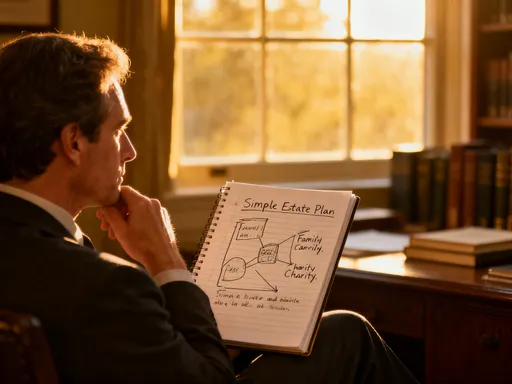
What happens to your wealth when you want to give back? I never thought much about estate planning until I decided to include charitable donations in my legacy. As a beginner, asset allocation felt overwhelming — balancing personal needs, family security, and philanthropy. But with simple, practical steps, I found a way to align my values with my finances. This is how I built a plan that supports causes I care about, without compromising my future. It wasn’t about becoming a millionaire philanthropist overnight. It was about making thoughtful choices today so that tomorrow, my money could continue to serve a purpose beyond myself. The journey began not with spreadsheets, but with a quiet question: What kind of mark do I want to leave?
The Moment I Realized My Money Could Last Beyond Me
The idea of leaving a legacy didn’t come to me in a financial seminar or from reading an investment newsletter. It arrived on a rainy afternoon, while I was watching a documentary about children in rural communities who walked miles each day just to reach a school with no books, broken desks, and only one teacher for dozens of students. I sat there, stirred by what I saw, and for the first time, I asked myself: what if part of what I’ve built could help change that reality? That moment marked the beginning of a deeper relationship with my finances — one that extended beyond budgeting and retirement accounts.
At first, I assumed estate planning was only for people with large estates or complicated family structures. I thought it meant drafting a will and being done with it. But as I began to explore, I realized it was far more intentional than that. Estate planning, especially when it includes charitable giving, is about deciding how your life’s work continues after you. It’s about ensuring that your values live on through the allocation of your assets. For me, this meant rethinking not just who would inherit what, but how my resources could serve a broader purpose.
I started small. I read articles, attended a free webinar hosted by a local community foundation, and spoke with a few friends who had already begun this process. What I discovered was surprising: charitable giving isn’t reserved for the wealthy. Even modest contributions, structured wisely, can create lasting impact. More importantly, integrating philanthropy into estate planning doesn’t mean taking away from family. It means designing a plan where everyone — loved ones and causes alike — can be cared for. That shift in mindset was powerful. It transformed my view of money from something to be hoarded into something to be shared.
What struck me most was the emotional weight of the decision. It wasn’t just financial — it was personal. I began reflecting on the organizations that had supported me or my family during difficult times. A food bank during a job loss, a scholarship that helped my child attend college, a health clinic that provided care when insurance fell short. These experiences shaped my values, and now, I had the opportunity to pay that support forward. The realization didn’t come with fanfare, but with a quiet sense of clarity: my money could outlive me, and it could do good long after I was gone.
Why Asset Allocation Isn’t Just About Investments — It’s About Values
When most people hear “asset allocation,” they think of percentages: 60% stocks, 40% bonds, maybe a splash of real estate. It’s often taught as a mechanical process — diversify to reduce risk, optimize for growth, rebalance annually. And while those principles are sound, I learned that asset allocation takes on a deeper dimension when philanthropy becomes part of the equation. It stops being just about numbers and starts being about meaning. Every dollar you own becomes a reflection of what you stand for.
For years, I managed my portfolio with one goal: security. I wanted enough to retire comfortably, handle emergencies, and leave something for my children. But once I introduced charitable giving into the picture, I began to ask different questions. Which assets could support my lifestyle? Which should go to my heirs? And which ones, if redirected, could create change in the world? This wasn’t about cutting back or sacrificing — it was about intentionality. I started mapping my assets not by their market value alone, but by their potential for impact.
I met with a financial advisor who specialized in charitable planning, and that conversation changed everything. She didn’t just look at my balance sheet — she asked about my values. What causes kept me up at night? Which organizations had earned my trust? Her approach was holistic: she showed me how different types of assets could serve different purposes in an estate plan. For example, taxable brokerage accounts with appreciated stocks are often ideal for charitable gifts because donating them avoids capital gains taxes. On the other hand, retirement accounts like IRAs or 401(k)s, which are taxed heavily upon withdrawal, can be powerful vehicles for charity — especially when leaving them to heirs would trigger high tax bills.
What surprised me most was that aligning my portfolio with my values didn’t mean accepting lower returns. In fact, it enhanced my sense of financial discipline. When I knew that a portion of my assets had a designated purpose — to fund education, support healthcare, or protect the environment — I became more mindful of how I managed the rest. I wasn’t just investing to grow wealth; I was investing to sustain a legacy. That shift in perspective brought a new level of focus and clarity to my financial decisions. Asset allocation, I realized, isn’t just a technical exercise. It’s a moral one.
Common Mistakes Beginners Make When Planning Charitable Gifts
Like many beginners, I entered this journey with good intentions but limited knowledge. I made assumptions that could have undermined my goals if I hadn’t taken the time to learn. One of the earliest mistakes was believing that charitable giving meant writing a check. I thought cash was the only way to donate. It wasn’t until I read a simple article about tax-efficient giving that I discovered the power of donating appreciated assets — stocks, mutual funds, or real estate that had increased in value. By giving these directly to charity, I could avoid paying capital gains tax and claim a full fair-market-value deduction. That single insight nearly doubled the effective value of my gift.
Another misconception I held was that only large donations matter. I told myself, “I’m not a billionaire — what difference can I really make?” But I learned that consistent, well-structured giving over time can have a profound effect. Many nonprofits rely on planned gifts from everyday people, not just high-net-worth donors. A $10,000 gift, directed through a donor-advised fund or a trust, can fund scholarships, support research, or provide meals for months. The impact isn’t measured by size alone, but by sustainability and intention.
Perhaps the most dangerous oversight was neglecting beneficiary designations. I assumed my will controlled everything. But I didn’t realize that accounts like IRAs, life insurance policies, and brokerage accounts pass directly to the named beneficiaries, regardless of what my will says. If I hadn’t updated these forms, my charitable intentions could have been completely bypassed. I learned that estate planning requires coordination across documents — wills, trusts, beneficiary forms, and deeds. A single outdated designation can unravel an entire plan.
I also underestimated the importance of clarity. Early on, I used vague language like “support education” in my notes. But charities need specific instructions. Does that mean K–12 schools? Higher education? Vocational training? Without precision, my executor might struggle to carry out my wishes. I revised my plan to name specific organizations and include backup beneficiaries in case one ceased to exist. These details may seem minor, but they’re essential for ensuring that your vision is honored exactly as intended.
Tools That Make Charitable Estate Planning Accessible (Even for Newcomers)
One of the most empowering discoveries I made was that effective charitable planning doesn’t require a team of lawyers or a private wealth manager. There are accessible, low-cost tools designed for people like me — ordinary individuals who want to give thoughtfully. The first tool I explored was the donor-advised fund, or DAF. It’s essentially a charitable savings account. I can contribute cash, stocks, or other assets, receive an immediate tax deduction, and then recommend grants to charities over time. What I love about DAFs is their flexibility. I can fund it in a high-income year to reduce my taxes, then take my time deciding which organizations to support.
Another option I researched was the charitable remainder trust (CRT). This was more complex, but the benefits intrigued me. A CRT allows me to transfer assets into a trust that pays me (or my spouse) a fixed or variable income for life. After our passing, the remaining assets go to the charity of our choice. This structure provided two benefits: income during our lifetime and a significant charitable gift later. While it required legal setup and ongoing management, the tax advantages — including an immediate income tax deduction and avoidance of capital gains — made it worth considering for a portion of my portfolio.
I also looked at simpler methods, like adding a charitable bequest to my will. This can be as straightforward as writing, “I leave 10% of my residuary estate to [Organization Name].” It’s one of the easiest ways to include philanthropy in estate planning. Similarly, I reviewed my life insurance policies and realized I could name a charity as a partial or full beneficiary. This is especially powerful because life insurance proceeds are generally income-tax-free, and the death benefit can be substantial compared to the premiums paid.
What I appreciated most about these tools was their accessibility. DAFs can be opened with as little as $5,000 at many financial institutions. Life insurance beneficiary changes take minutes to complete. Will updates can be handled with an estate attorney for a reasonable fee. None of these require extraordinary wealth. They require only intention and a bit of planning. By testing a few options, I found that a combination of a DAF and specific bequests worked best for my situation. It gave me control, simplicity, and peace of mind.
Balancing Family Needs and Philanthropy — A Practical Approach
One of my deepest concerns was fairness. How could I support my children and grandchildren while also giving to charity? I didn’t want to create tension or make anyone feel overlooked. I quickly realized that philanthropy and family care aren’t mutually exclusive. In fact, they can complement each other when approached with clarity and communication. The key was not to see my estate as a fixed pie to be divided, but as a portfolio to be structured.
I decided to allocate a portion — around 10% to 15% — of my total assets to charitable causes. This wasn’t a random number. I ran projections with my financial advisor to ensure that even after this allocation, my family would be financially secure. I prioritized liquid assets like savings and investment accounts for my heirs, as these are easy to access and distribute. For charitable gifts, I directed less liquid or tax-inefficient assets, such as appreciated stocks or retirement accounts. This strategy allowed me to make meaningful gifts without reducing the value passed to my family.
Transparency was crucial. I sat down with my children and explained my intentions. I shared the organizations I cared about and why. To my surprise, the conversation brought us closer. My daughter mentioned that she’d been thinking about starting her own giving plan. My son asked questions about how trusts work. By being open, I turned what could have been a source of confusion into an opportunity for connection and education.
I also built in safeguards. I structured my plan so that charitable gifts would only take effect after my passing, ensuring that my own needs came first. I included provisions for changes in circumstances — if a charity no longer existed or if family needs shifted, the plan could adapt. This flexibility helped me feel confident that I was being responsible, not rigid. Balancing family and philanthropy isn’t about perfection. It’s about creating a plan that reflects your values while honoring your responsibilities.
Tax Efficiency: The Silent Benefit of Smart Charitable Planning
I didn’t start this journey for the tax benefits. My motivation was emotional and ethical — I wanted to make a difference. But I’d be dishonest if I said I ignored the financial advantages. Strategic charitable planning can significantly reduce income, capital gains, and estate taxes. These savings aren’t about keeping more for myself — they’re about ensuring more of my wealth goes to the causes I care about.
One of the most powerful tax strategies I learned involves donating appreciated assets. If I sell a stock that has grown in value, I’d owe capital gains tax. But if I donate that stock directly to a charity or a donor-advised fund, I avoid the tax entirely and can deduct the full market value. This simple shift can increase the value of my gift by 15% to 20%, depending on tax rates. It’s not a loophole — it’s a feature of the tax code designed to encourage giving.
Another significant benefit comes from retirement accounts. When I withdraw from an IRA, the amount is taxed as ordinary income. If I leave that account to a charity, it’s exempt from income tax. If I left it to my heirs, they’d owe taxes on every dollar they withdraw. By naming a charity as the beneficiary of a portion of my IRA, I reduce the tax burden on my family and maximize the impact of my gift. This is especially effective for accounts that are expected to grow substantially over time.
I also used timing to my advantage. In years when my income was higher — perhaps due to a bonus or sale of property — I made larger contributions to my donor-advised fund. This lowered my adjusted gross income, potentially moving me into a lower tax bracket and reducing my overall liability. These benefits don’t change my motivation to give, but they do make my giving more efficient. They allow me to do more good with the same amount of money — and that’s a win for everyone.
Building a Legacy That Reflects Who You Are — Not Just What You Own
In the end, this journey transformed my relationship with money. It’s no longer just a tool for comfort or security. It’s a vehicle for values. The process of allocating assets for charitable giving gave me a sense of purpose and continuity. I now see my financial plan not as a collection of accounts, but as a reflection of who I am and what I believe in. Legacy, I’ve learned, isn’t about the size of your estate. It’s about the depth of your intention.
Setting up charitable gifts didn’t require heroic wealth or complex legal structures. It required honesty, clarity, and a willingness to plan ahead. Whether through a donor-advised fund, a bequest in a will, or a trust, the act of giving through estate planning turns abstract values into concrete outcomes. A child receives a scholarship. A community gains access to clean water. A researcher gets funding to find a cure. These are not distant possibilities — they are real, measurable impacts made possible by thoughtful decisions today.
I’ve also come to appreciate that legacy isn’t something you leave only at the end of life. It’s something you build every day. By discussing my plans with my family, supporting causes I care about now, and modeling intentional giving, I’m already living my legacy. My hope is that this example will inspire others — especially women who manage household finances and care deeply about their communities — to consider how their assets can serve a greater purpose.
You don’t need to be rich to start. You just need to care. And once you do, the tools are there to help you turn that care into action. Whether you begin with a small bequest or a simple beneficiary designation, you’re taking a step toward a future where your money continues to make a difference. That, to me, is the true measure of wealth — not in dollars, but in the lives it touches long after you’re gone.