How I Stayed Tax-Smart After a Sudden Financial Shock
Life threw me a curveball when an unexpected accident disrupted my finances. Suddenly, medical bills piled up and income stalled—but I realized tax compliance could make or break my recovery. What I learned wasn’t just about forms or deadlines; it was about smart, legal moves that protected my money. This is how I navigated the mess, stayed compliant, and kept more of what I earned—without stress or surprises. The experience taught me that financial resilience isn’t built in crisis, but before it. And tax planning, often seen as a chore, became my most powerful tool for regaining control when everything else felt uncertain.
The Accident That Changed Everything
It started with a rainy evening drive home from a routine errand. A distracted driver ran a red light, and in seconds, my life shifted. I was hospitalized for two weeks with injuries that required surgery and months of physical therapy. While I was grateful for medical care and insurance, what followed was not healing alone—it was financial chaos. My income as a freelance consultant dropped nearly to zero. Clients paused projects, deadlines slipped, and I could no longer take on new work. At the same time, medical bills began arriving—co-pays, specialist fees, prescription costs, and charges for treatments not fully covered. The stress was overwhelming, not just physically but emotionally and financially. I had savings, but they were meant for a home down payment, not emergency medical expenses. What I didn’t realize then was that my tax situation was quietly compounding the crisis. I missed a quarterly estimated tax payment. I didn’t know how to report disability income from my insurance. I delayed filing because I thought I couldn’t afford a tax professional. Each small delay felt insignificant at the time, but together, they created a web of complications that made recovery harder.
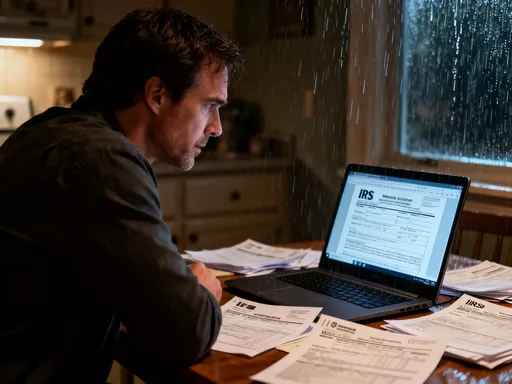
Looking back, I see that the real shock wasn’t just the accident—it was the exposure of how fragile my financial safety net truly was. I had health insurance, yes, but I didn’t have a plan for how income interruptions or medical costs would affect my tax obligations. I assumed that as long as I paid my bills and stayed insured, I was protected. But taxes don’t pause during hardship. The IRS doesn’t offer automatic grace periods for accidents, illnesses, or lost income. What I learned the hard way is that tax compliance isn’t optional, even in crisis—it’s a critical part of financial survival. Failing to report income correctly, missing deadlines, or not claiming eligible deductions can lead to penalties, interest, audits, and lost benefits. And when you’re already struggling, those consequences can be devastating. The turning point came when I received a notice from the IRS about underreported income. That letter wasn’t just a warning—it was a wake-up call.
Why Tax Compliance Matters in a Crisis
When life takes an unexpected turn, the last thing most people want to think about is taxes. Yet, that’s exactly when attention to tax compliance becomes most important. Many assume that if they’re not earning as much, they don’t need to file—or that the government will understand and forgive late filings. But the tax system operates on rules, not empathy. Failing to file or report changes in income can lead to real financial penalties at the worst possible time. In my case, I received a private disability insurance payout that replaced part of my lost income. I didn’t realize that some of that money was taxable. I treated it like a gift or compensation and didn’t include it in my tax return. When the IRS matched it to a 1099 form I hadn’t seen, the discrepancy triggered a notice. What started as a simple oversight turned into a months-long process of back-filing, penalty assessments, and stress I couldn’t afford.
Tax compliance during a crisis isn’t about perfection—it’s about protection. Staying current with your obligations helps you avoid compounding your problems with fines, interest, or audits. It also ensures you don’t miss out on relief you’re entitled to. For example, the IRS allows deductions for medical expenses that exceed a certain percentage of your adjusted gross income. But you can only claim them if you file and itemize. If you don’t file because you think you owe nothing, you lose that benefit. Similarly, if you’re receiving unemployment benefits, Social Security disability, or insurance payouts, some of those may be taxable. Reporting them correctly prevents future surprises. I learned that compliance isn’t a burden—it’s a shield. It keeps you in good standing with the IRS, maintains your eligibility for future credits, and preserves your financial reputation. In times of crisis, every dollar counts. Losing money to avoidable penalties is like pouring water out of a sinking boat with a cup.
Moreover, staying tax-compliant opens doors to assistance. Many government and nonprofit programs require proof of filed tax returns as part of eligibility. Whether it’s utility assistance, housing support, or healthcare subsidies, your tax history can determine access. When I applied for a medical hardship program, I was asked for the last two years of tax returns. Because I had delayed filing, I had to scramble to get everything in order. That delay cost me three weeks of eligibility. The lesson was clear: tax compliance isn’t just about avoiding trouble—it’s about positioning yourself to receive help when you need it most. It’s a foundational piece of financial resilience. And resilience, I’ve learned, isn’t about avoiding storms. It’s about building a boat that can weather them.
The Hidden Tax Relief No One Talks About
One of the most empowering discoveries during my recovery was realizing how much tax relief I was eligible for—but didn’t know about. I had always filed using the standard deduction because it was simple. I didn’t realize that in years with high medical expenses, itemizing could save me hundreds or even thousands of dollars. After consulting a tax counselor, I learned that unreimbursed medical costs—like co-pays, prescription drugs, medical equipment, and even travel for treatment—can be deducted if they exceed 7.5% of my adjusted gross income. For someone facing a sudden health crisis, those expenses can add up quickly. In my case, I had spent over $12,000 out of pocket in one year. My adjusted gross income was $45,000, so 7.5% of that was $3,375. That meant I could deduct $8,625 in medical expenses. When combined with other itemized deductions like charitable contributions and state taxes, I ended up saving more than $2,000 in federal taxes that year.
This wasn’t a loophole or a trick—it was a legal provision designed to help people in exactly my situation. But no one had told me about it. My previous tax software defaulted to the standard deduction and didn’t prompt me to consider itemizing. I had to dig into IRS Publication 502 to understand what qualified. Things like mileage to and from medical appointments—58 cents per mile in the year I was injured—were deductible. So were parking fees, tolls, and even the cost of a hospital parking pass. I kept a log of every trip and saved every receipt. I also learned that home modifications for medical reasons—like installing a shower chair or widening a doorway—could be partially deductible if recommended by a doctor. I didn’t make those changes, but knowing the rules gave me a sense of control.
The key was documentation. The IRS doesn’t require you to submit receipts with your return, but they do require you to keep them for at least three years in case of an audit. I created a digital folder labeled “Medical Expenses 2023” and uploaded scans of every bill, receipt, and insurance explanation of benefits. I organized them by month and category. When tax season came, I could pull up everything in minutes. That organization didn’t just save me time—it saved me money. I didn’t miss a single deductible expense. And because I had everything ready, I could file early and avoid the last-minute rush. The relief I felt wasn’t just financial. It was emotional. For the first time since the accident, I wasn’t reacting to chaos—I was taking action. I was using the system, not being crushed by it.
How I Adjusted My Income Reporting Without Panic
One of the most confusing parts of my financial recovery was understanding what income to report and how to report it. My earnings had changed dramatically. I had a small disability insurance payout, some income from part-time remote work, and a one-time settlement from the car accident. Each type of income had different tax rules, and I was terrified of making a mistake. I didn’t want to underreport and risk penalties, but I also didn’t want to overpay. The first step was sorting the income streams. The disability insurance was partially taxable because I had paid the premiums with after-tax dollars. The part-time work was self-employment income, subject to both income tax and self-employment tax. The settlement was trickier—compensation for physical injury was generally not taxable, but any portion for lost wages was.
I learned that the forms I received were critical. My insurance company sent a 1099-LTC for the long-term care benefits, but I had to determine how much of that was taxable. My freelance clients issued 1099-NEC forms for payments over $600. I had to report all of it, even if I didn’t receive a form. I used a spreadsheet to track every dollar I earned, categorized by source. I also noted the dates, payment methods, and any expenses related to earning that income. For example, a portion of my internet bill, home office space, and even part of my phone bill were deductible business expenses. Claiming them reduced my taxable income and lowered my tax bill. I didn’t need to be an accountant to do this—just organized and honest.
What helped most was taking a calm, methodical approach. Instead of rushing to file, I gave myself time to gather information. I contacted the IRS website for guidance on disability income reporting. I reviewed IRS Topic No. 436 and Publication 907, which explained how to report disability benefits. I also reached out to my insurance provider to clarify the breakdown of my payments. Once I had all the facts, I used tax software that walked me through each step, asking questions to determine what applied to my situation. The process wasn’t fast, but it was accurate. And accuracy, I learned, is the best defense against future problems. When you report your income correctly, you sleep better at night. You don’t have to look over your shoulder, wondering if a notice will arrive. You’ve done your part. And that peace of mind is worth more than any tax savings.
Building a Buffer: Smart Moves for Future Emergencies
Once I stabilized financially, I knew I couldn’t go back to the way things were. I needed a plan that would protect me if something like this happened again. The first step was creating a dedicated emergency fund. I started small—$50 a month—and gradually built it to cover three to six months of essential expenses. I kept it in a high-yield savings account, separate from my regular checking, so I wouldn’t be tempted to dip into it. This fund wasn’t for vacations or shopping—it was for true emergencies: medical crises, job loss, or unexpected repairs. Knowing it was there reduced my anxiety and gave me breathing room.
I also restructured my budget to include a “tax readiness” category. Every month, I set aside a percentage of my income—around 25% for self-employment taxes and federal withholding—into a separate savings account. That way, when tax time came, I wasn’t scrambling to come up with thousands of dollars. I also began tracking deductible expenses year-round, not just in December. I kept digital records of medical costs, charitable donations, business expenses, and home office usage. I used cloud storage so I could access everything from any device, even if my computer failed. I labeled files clearly and backed them up regularly.
Another key change was scheduling an annual check-in with a tax professional. I didn’t need full representation—just a 60-minute consultation to review my situation, ask questions, and get ahead of potential issues. That single meeting each year helped me avoid costly mistakes and identify opportunities I would have missed. It was a small investment with a high return. These habits didn’t require a high income or financial expertise. They required consistency and intention. Over time, they became routine—like brushing my teeth or checking the mail. And they transformed my relationship with money. I no longer saw taxes as a burden. I saw them as part of my financial health, like diet and exercise are part of physical health. By preparing in advance, I built resilience. And resilience, I’ve learned, is the best defense against uncertainty.
When to Seek Help (And Where to Find It)
For months, I tried to handle everything on my own. I was proud, maybe too proud, and I worried that hiring a professional would be too expensive. I used free tax software and online forums, but I kept making mistakes. I missed deductions. I misreported income. I filed late. It wasn’t until I received the IRS notice that I realized I needed help. The turning point came when I discovered the Volunteer Income Tax Assistance (VITA) program. Sponsored by the IRS, VITA offers free tax preparation services to low-to-moderate-income individuals, seniors, and people with disabilities. I qualified based on my reduced income that year. I made an appointment at a local community center and met with a certified volunteer tax preparer. In one hour, she clarified my entire situation, corrected my previous errors, and helped me file an amended return. The service was completely free.
That experience changed my perspective. Seeking help wasn’t a sign of failure—it was a smart financial decision. I also learned about other resources. The Tax Counseling for the Elderly (TCE) program specializes in helping seniors with pension and retirement-related issues. Many nonprofit credit counseling agencies offer financial coaching and tax guidance. I found one that provided a free budget review and helped me set up a payment plan for a small tax debt I owed. I was cautious, of course. I avoided services that promised “tax forgiveness” or charged upfront fees. I stuck to IRS-authorized programs and nonprofit organizations with solid reputations. I also used the IRS website’s tools, like the Interactive Tax Assistant and the “Where’s My Refund?” tracker, to get reliable information without cost.
The lesson was clear: you don’t have to go it alone. There are legitimate, free, and low-cost resources available to help you navigate tax challenges, especially during hard times. The key is knowing where to look and being willing to ask. That single consultation didn’t just fix my tax return—it gave me confidence. It showed me that with the right support, I could regain control. And that empowerment made all the difference in my recovery.
Turning Crisis into Control: A New Financial Mindset
Recovery wasn’t just about healing my body—it was about rebuilding my financial life and my sense of self. The accident left scars, but it also gave me clarity. I used to see taxes as something separate from my daily life—an annual chore to endure. Now, I see tax planning as a continuous part of financial wellness. It’s not about minimizing what I owe at all costs. It’s about understanding the rules, using them fairly, and making informed decisions. That shift in mindset didn’t happen overnight. It grew from experience, from mistakes, from asking questions, and from taking small, consistent actions.
I now track my deductible expenses throughout the year. I save receipts digitally. I set aside money for taxes monthly. I file on time, even if I can’t pay the full amount—because I know that filing avoids penalties. I communicate with the IRS when I need to. I’ve learned that the system isn’t the enemy. It’s a framework, and when you understand it, you can work within it to protect yourself. Staying tax-compliant isn’t a burden—it’s a form of self-care. It’s how I honor the work I do, the money I earn, and the life I’m rebuilding.
Most importantly, I’ve learned that financial strength isn’t about having a lot of money. It’s about having control. It’s about making smart choices before crisis hits, so when it does, you’re not starting from zero. I don’t have a perfect financial life. But I have a resilient one. And that resilience gives me peace, confidence, and freedom I didn’t have before.
What started as a personal disaster became a lesson in resilience. By facing the tax implications head-on, I turned a moment of crisis into long-term strength. The real win wasn’t saving a few dollars—it was gaining control. You don’t need perfect finances to start. You just need to start smart.