I kept changing mattresses every year: This smart bed learned my sleep and stopped the guesswork
Ever found yourself buying a new mattress every few years, hoping this time it’ll be the one that finally feels right? I was stuck in that cycle—until my smart bed started learning how I sleep, adjusting quietly over time, and actually getting me. No more guessing, no more back pain, just a bed that evolves with me. Sound impossible? It’s not. And it’s changing how I think about rest, health, and even daily energy. I didn’t realize how much I was carrying the weight of poor sleep until it was gone—until I stopped fighting my bed and started trusting it.
The Endless Mattress Chase: When Comfort Feels Like a Moving Target
Let’s be honest—how many of us have stood in a mattress store, lying awkwardly on a dozen different beds, trying to imagine what it would feel like after eight hours? I’ve done it—more than once. I’ve spent weekends researching firmness scales, watching endless YouTube reviews, reading customer testimonials that all say the same thing: "It’s the best mattress I’ve ever owned." And yet, every time, within a year or two, I’d wake up with that familiar ache in my lower back, or I’d toss and turn through the night, too hot on one side, too cold on the other. I started to wonder if I was just impossible to please.
The truth is, I wasn’t. I was just asking a static object to meet changing needs. Our bodies shift over time—hormones, weight, activity levels, stress—all of it affects how we sleep. And yet, most of us expect one mattress to stay perfect for a decade. That’s like buying a pair of shoes in your twenties and expecting them to fit just as well in your fifties, no matter how your feet have changed. It’s not realistic. The mattress industry has long operated on a one-size-fits-all model, with a few minor variations in firmness. But comfort isn’t just soft or firm—it’s deeply personal. It’s about how your hips align, how your shoulders sink, how your spine rests in its natural curve. And when that alignment is off, even slightly, it adds up—night after night, year after year.
I remember one winter, I bought a high-end memory foam mattress after reading glowing reviews. I was so excited. But within three months, I started waking up stiff, like I’d been sleeping on a concrete slab with a pillow on top. I tried adding a topper, then removing it. I flipped it, even though it wasn’t supposed to be flipped. I slept on the couch for a week, just to see if I was imagining it. My husband said it felt great—no issues at all. And that was the moment I realized: comfort isn’t universal. What works for one person might be torture for another. The problem wasn’t the mattress. The problem was that it couldn’t adapt. It couldn’t learn. It was the same on night one as it was on night 365. And I was the one left trying to adjust to it, instead of the other way around.
How a Mattress Can “Learn” You: The Quiet Intelligence Beneath Your Back
When I first heard about smart beds that “learn” your sleep, I’ll admit—I was skeptical. It sounded like tech for tech’s sake, like one of those gadgets that promises the world but ends up collecting dust in a closet. But then I started talking to people who actually used them—friends, neighbors, even my sister-in-law, who’s not exactly a tech enthusiast. And they all said the same thing: "It just… gets me." That stuck with me. So I did some digging, not into specs or sensors, but into how it actually feels to live with one.
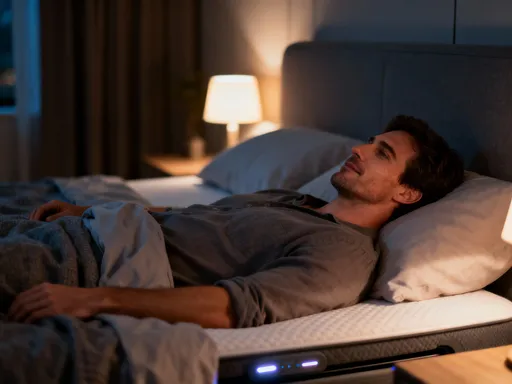
Here’s what I learned: these beds aren’t making wild guesses or sudden changes. They’re quietly observing. Think of it like your favorite playlist that starts to know what you like—the more you listen, the better the recommendations get. A smart bed works the same way. Tiny sensors woven into the foundation or layered in the comfort zone track things like your movement, your breathing rhythm, where you put the most pressure, and even how warm you get during the night. It’s not invasive. There are no cameras, no wires sticking out, no blinking lights. It’s all built in, invisible, working in the background.
Over the first few weeks, the bed is like a new friend getting to know your habits. It notices that you tend to shift onto your side around 2 a.m., and that your left shoulder presses down harder than your right. It sees that your lower back lifts slightly when you’re on your back, meaning you might need a little more support there. It picks up on the nights you wake up hot and restless, and the mornings you feel stiff after sleeping in one position too long. This isn’t about fixing one night’s bad sleep—it’s about building a long-term picture of your unique patterns. And the more you use it, the smarter it gets. It’s not AI shouting orders; it’s intelligence that listens, learns, and gently responds.
What surprised me most was how unobtrusive it felt. I thought I’d have to download an app, fiddle with settings, approve changes. But no—once it’s set up, it runs on its own. You don’t have to do anything. You just sleep. And slowly, almost imperceptibly, the bed starts to feel… right. Not perfectly so on night one, but better each week. It’s like the difference between meeting someone for the first time and sitting across from a dear friend—you don’t have to explain yourself. The bed just knows.
From Data to Comfort: How Learning Translates into Better Sleep
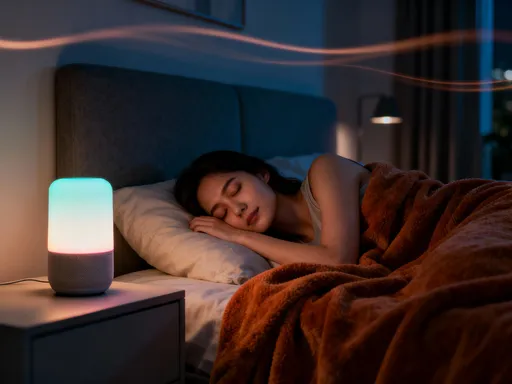
So what actually happens after the learning phase? This is where the magic—quiet, subtle magic—starts to show up. The bed doesn’t overhaul itself overnight. It doesn’t jolt you awake with a sudden firmness change. Instead, it makes micro-adjustments, often while you’re asleep. Imagine your shoulders sinking just a little deeper into softness, while your hips get a bit more lift to keep your spine aligned. Or your lower back getting a gentle boost of support as you shift positions. These aren’t dramatic moves—they’re more like whispers of comfort, fine-tuning your sleep surface based on what it’s learned about your body.
Temperature regulation is another game-changer. I used to wake up around 3 or 4 a.m., drenched and tossing the covers off. My old mattress trapped heat like a sauna. The smart bed, though, adjusts airflow based on your body’s heat patterns. If it senses you’re warming up, it increases ventilation in that zone. If you tend to get cold feet, it can focus warmth there. It’s not about blasting cold or hot air—it’s about balance. And the result? I started sleeping through the night. Not because I was trying harder, but because my environment was finally working *with* me, not against me.
One of the most emotional moments was waking up one morning and realizing I didn’t have that knot in my shoulder. No stretching, no groaning, no reaching for the pain reliever. Just… ease. I actually paused and thought, "Is this what it feels like to wake up rested?" It sounds silly, but I hadn’t felt that in years. My husband noticed too—he said I seemed lighter, more present at breakfast. And it wasn’t just me. Our daughter, who sometimes sneaks into our bed during storms, started sleeping deeper too. She’d curl up and stay put all night, instead of tossing and turning like she used to. The bed was learning her patterns too, adjusting to her smaller frame, her restless sleep. It wasn’t just for me—it was becoming part of our family’s rhythm.
And here’s the thing: the bed doesn’t reset. It remembers. After I had a minor back strain from gardening, it detected the change in my movement and adjusted to give me extra lumbar support. As I healed, it gradually eased back. It didn’t need instructions. It just responded. That continuity—knowing it’s not starting over every night—is what makes it feel so personal. It’s not a product. It’s a partner in rest.
The Real Win: Relief from Decision Fatigue and Constant Tweaking
Let’s talk about the mental load. As women, especially in our thirties, forties, and beyond, we carry so much. Work, family, aging parents, household management—we’re constantly making decisions, big and small. And even something as simple as choosing a pillow or deciding whether to open the window at night adds to that load. I didn’t realize how much energy I was spending on sleep until I stopped having to think about it.
Before the smart bed, my bedtime routine included a mental checklist: Did I flip the mattress this month? Is the topper still effective? Should I try a different pillow? Is the room too dry? Too warm? I was treating sleep like a project to optimize, instead of a natural part of life. And every time I woke up sore or tired, I’d blame myself—"Maybe I should’ve stretched more," "Maybe I drank too much coffee." But the truth was, my bed wasn’t helping. It was part of the problem.
Now, that mental checklist is gone. I don’t have to tweak anything. I don’t have to research new products. I don’t lie awake wondering if I made the right choice. The bed takes care of the details. And that freedom—from decision fatigue, from constant adjustment—is priceless. It’s not just about comfort. It’s about peace. It’s the quiet relief of knowing that, at the end of a long day, one thing is handled. One thing is *right*. And that makes everything else feel a little more manageable.
I’ve had friends ask, "Isn’t it strange to let a bed make decisions for you?" And my answer is always the same: "No—because it’s not making decisions *for* me. It’s making them *with* me, based on what I’ve shown it over time." It’s like having a personal sleep coach who never talks, never judges, just quietly supports you. And in a world where we’re constantly being asked to do more, be more, achieve more, having one part of life that just *works*—that asks nothing of you—is a kind of luxury we don’t talk about enough.
Fitting Into Real Life: No Wires, No Drama, Just Better Mornings
I know what you’re thinking: "This sounds great, but is it complicated?" I thought the same. I didn’t want a bed that needed charging, or an app I had to check every morning, or a setup that looked like a science experiment. What I wanted was a bed that looked and felt like a bed—just a better one.
And that’s exactly what I got. The setup took less than an hour. No tools, no complicated wiring. It came in a box, we unrolled it, let it expand, and that was it. The app is optional—if you want to see your sleep data, adjust settings, or set temperature zones, it’s there. But you don’t need it. The bed learns and adjusts on its own. I haven’t opened the app in months. And that’s by design. The technology isn’t meant to be front and center. It’s meant to fade into the background, so all you notice is how you feel in the morning.
My husband, who was the biggest skeptic, now admits he can’t imagine going back. He used to wake up multiple times a night, mostly because I’d shift and disturb him. But the smart bed reduces motion transfer—when I move, he barely feels it. And because we each have our own sleep profile, the bed can adjust different zones for each of us. He likes it firmer; I like a little more give. And the bed accommodates both, without compromise. It’s like having two perfect beds in one.
And the best test of all? Our kids love it. Our youngest still sometimes climbs in with us during thunderstorms or bad dreams. And instead of waking up cranky or restless, she sleeps soundly. She’ll curl up between us and stay asleep for hours. That’s when I know it’s not just about me. It’s about creating a home where rest is supported, where everyone—big and small—can recharge in a space that truly fits them. That’s not a gadget. That’s a foundation for family well-being.
Beyond Sleep: How Better Rest Fuels Clarity, Mood, and Daily Performance
Sleep isn’t just about not being tired. It’s about how you show up in the world. And when you’re truly rested—when your body has had the chance to repair, your mind to reset—everything changes. I started noticing it in small ways. I had more patience with my teenage daughter during her mood swings. I didn’t snap at my husband over little things. I felt more focused at work, able to tackle complex tasks without that foggy, overwhelmed feeling.
But the biggest shift was emotional. I felt less reactive. Less drained. Less like I was running on fumes. I started taking walks again, just because I had the energy. I cooked meals without dreading the cleanup. I even started journaling—something I’d abandoned years ago because I was too exhausted at night. Better sleep didn’t just give me more hours in the day. It gave me more *quality* in those hours. I wasn’t just surviving. I was living.
And it’s not just anecdotal. Science shows that consistent, high-quality sleep improves mood regulation, boosts immune function, enhances memory and learning, and supports heart health. When your body isn’t constantly fighting fatigue or pain, it can focus on healing, balancing hormones, and managing stress. The smart bed isn’t a medical device, but it creates the conditions for your body to do its best work. It’s like giving your nervous system a daily reset. And over time, that adds up—not just in better mornings, but in a better life.
I’ve stopped thinking of my bed as just a piece of furniture. It’s more like a silent guardian of my well-being. It doesn’t ask for attention. It doesn’t need maintenance. It just works, night after night, helping me show up as the person I want to be—calmer, kinder, more present. And isn’t that what we all want? To feel like ourselves, even on the hard days?
The Quiet Revolution: Rethinking Rest as Self-Care, Not a Chore
When I think back to those years of mattress shopping—the receipts, the returns, the frustration—I realize I was chasing perfection. I thought if I just found the right product, everything would click. But the truth is, perfection isn’t static. It evolves. And so do we. The real breakthrough wasn’t finding a better mattress. It was letting go of the idea that I had to figure it all out on my own.
This smart bed didn’t just change how I sleep. It changed how I think about rest. It’s no longer something I have to force, optimize, or earn. It’s something I’m supported in—gently, intelligently, without effort. It’s a reminder that self-care isn’t always about grand gestures. Sometimes, it’s about creating a space where you can simply *be*, where your body is held, your needs are met, and you’re allowed to recharge without guilt or struggle.
In a world that never slows down, that’s revolutionary. Not because it’s loud or flashy, but because it’s quiet. Because it works without demanding anything. Because it adapts, learns, and grows with you. This isn’t just a mattress. It’s a new way of living—one where technology doesn’t add to the noise, but helps you find peace in the middle of it. And if that means I never have to buy another mattress again, I’m okay with that. Because I’ve finally found the one that wasn’t just right for me today—but is ready to grow with me tomorrow, and every night after that.